Attack on Titan – Zwischen Menschlichkeit und Abgründen die das Sein in Frage stellen

Als die Titanen kamen, war nichts mehr, wie es war. Riesige, menschenähnliche Kreaturen brachen durch die Mauern, die der Menschheit über ein Jahrhundert lang Schutz versprachen, und ließen nur Tod und Chaos zurück. Attack on Titan beginnt mit einem Bild des Schreckens – und führt von dort aus eine Geschichte fort, die so viel mehr ist als eine Erzählung von Kampf und Überleben. Es ist ein politischer Thriller, ein Kriegsdrama, eine Identitätssuche. Und vor allem: eine schonungslose Konfrontation mit dem, was Menschlichkeit bedeutet, wenn sie unter Druck steht.
Im Zentrum steht Eren Jäger, ein Junge, der als Kind miterlebt, wie seine Mutter von einem Titanen getötet wird. Was als Rachedurst beginnt, wird mit jeder Folge komplexer. Eren will nicht nur kämpfen, er will die Welt jenseits der Mauern sehen – eine Welt, die nicht nur geografisch, sondern auch ideologisch verschlossen ist. An seiner Seite: Mikasa Ackerman, seine schweigsame und überaus fähige Mitstreiterin, sowie Armin Arlert, sein sensibler Kindheitsfreund mit scharfem Verstand. Gemeinsam treten sie dem Aufklärungstrupp bei – einer militärischen Einheit, die es sich zur Aufgabe gemacht hat, die Titanen zu erforschen und zurückzuschlagen.
Doch mit jeder entdeckten Wahrheit weicht das Schwarz-Weiß-Bild einer zunehmend grau gefärbten Realität. Die Titanen sind nicht nur Monster, sondern Teil eines größeren Spiels. Menschliche Abgründe offenbaren sich: Machtmissbrauch, Propaganda, Ausgrenzung. Attack on Titan schreckt nicht davor zurück, große Fragen zu stellen – über Krieg und Frieden, über Schuld und Verantwortung, über Freiheit und die Grenzen des moralisch Vertretbaren.
Die Serie basiert auf dem gleichnamigen Manga von Hajime Isayama, der 2009 im Bessatsu Shōnen Magazine erschien. Der Stil des Mangas ist roh, kantig, oft brutal – aber nie effektheischend. Isayama selbst sagt, er wollte eine Geschichte erzählen, die seine Angst vor Isolation und Unbekanntem verarbeitet. Und genau das ist Attack on Titan: eine Geschichte, in der Angst nicht nur von außen kommt, sondern auch im Innersten der Figuren brodelt. Der Manga wurde 2021 abgeschlossen, die Anime-Adaption zählt zu den weltweit erfolgreichsten Anime-Produktionen aller Zeiten.
Was Attack on Titan so besonders macht, ist seine Wandlungsfähigkeit. Kaum ein Anime beginnt so klassisch dystopisch – nur um dann Schritt für Schritt das eigene Narrativ zu dekonstruieren. Vom Monsterhorror zur Politparabel, von der Coming-of-Age-Story zur Kriegserzählung. Und bei allem bleibt eines konstant: die emotionale Wucht. Charaktere, deren Entscheidungen nachvollziehbar, aber nicht immer richtig sind. Verluste, die weh tun. Und Ideale, die sich immer wieder mit der Realität messen müssen – und dabei nicht selten zerbrechen.
Genretechnisch lässt sich Attack on Titan dem Dark Fantasy-Genre zuordnen, mit starken Elementen aus Action, Militärdrama, Mystery und psychologischem Thriller. Die Animationen – vor allem in späteren Staffeln durch Studio MAPPA – setzen Maßstäbe: dynamisch, brutal choreografiert, in ihrer Wucht oft schwer zu vergessen.
AOT ist ein must see Anime. Er erzählt nicht nur, sondern fordert heraus. Gibt sich nicht mit einfachen Antworten zufrieden. Der Zuschauer muss immer wieder neu hinterfragen, wem er traut – und warum. Er zeigt, dass wahre Größe nicht in Stärke liegt, sondern in der Fähigkeit, die Konsequenzen des eigenen Handelns zu tragen.
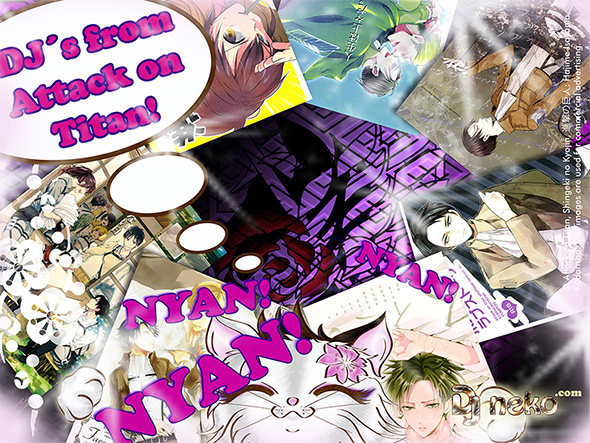
Und wer nach der letzten Episode das Gefühl hat, dass diese Welt noch weiterlebt – dass Figuren wie Levi, Erwin, Hange oder Historia Raum für mehr lassen –, wird im DJ-Neko Shop fündig. Die Auswahl an Doujinshis zu Attack on Titan ist ebenso vielschichtig wie die Serie selbst: von dramatischen Neudeutungen über zarte Romanzen bis hin zu humorvollen Alltagsgeschichten. Gerade im Boys’ Love-Bereich finden sich zahlreiche Werke, die sich mit der emotionalen Tiefe beschäftigen, die die Serie oft nur andeutet. Ob Levi und Eren, Erwin und Levi oder auch Pairings abseits des Mainstreams – entdecke neue Perspektiven auf bekannte Charaktere.
Denn wie Attack on Titan selbst schon lehrt: Nichts ist jemals nur das, was es auf den ersten Blick zu sein scheint.
Attack on Titan – Between humanity and abysses that challenge existence
When the Titans came, nothing remained as it had been. Giant humanoid creatures breached the walls that had shielded humanity for over a century, leaving only death and chaos in their wake. Attack on Titan opens with a horrifying scene – but from there, it unravels into a story that transcends mere survival and combat. It is a political thriller, a war drama, a quest for identity. Above all: an unflinching confrontation with what it means to be human under pressure.
At the heart stands Eren Yeager, a boy who vitally witnessed his mother’s death at a Titan’s hands. What starts as a thirst for revenge becomes deeper with each episode. Eren refuses to simply fight – he yearns to see the world beyond the walls, a world locked not just geographically but ideologically as well. Alongside him are Mikasa Ackerman, his silent yet highly skilled comrade, and Armin Arlert, his sensitive childhood friend with a sharp intellect. Together, they join the Scout Regiment – a military unit devoted to researching and combating the Titans.
But with every discovery, the black-and-white worldview fades into gray. Titans are not mere monsters – they are part of a larger game. Human darkness emerges: abuse of power, propaganda, exclusion. Attack on Titan does not shy away from big questions – about war and peace, guilt and responsibility, freedom, and the bounds of morality.
The anime is based on Hajime Isayama’s manga, first published in 2009 in Bessatsu Shōnen Magazine. Marked by a raw, angular and often brutal style, the manga never seeks shock value. Isayama himself explains that he wanted to channel his fear of isolation and the unknown. That is precisely what Attack on Titan is: a story where fear doesn't only come from outside, but also simmers within the characters themselves. The manga concluded in 2021, and the anime adaptation stands as one of the most powerful productions in anime history.
What sets Attack on Titan apart is its transformative nature. Few anime begin with classic dystopia – only to methodically deconstruct their own narrative. From monster horror to political allegory, from coming-of-age tale to grim war epic. Through it all, one thread remains unbroken: emotional intensity. Characters whose decisions are understandable but not always right. Losses that hurt. Ideals measured against reality – and often shattered.
Genre-wise, Attack on Titan belongs to Dark Fantasy, infused with elements of action, military drama, mystery, and psychological thriller. The animation – especially in later seasons by studio MAPPA – sets new standards: brutal choreography, unforgettable intensity.
AOT is a must-see anime. It doesn’t just tell a story – it challenges you. It refuses easy answers. The viewer must continuously re-evaluate whom they trust – and why. It shows that true greatness lies not in power, but in the willingness to bear the consequences of one's actions.
And if, after the final episode, you feel this world lives on – characters like Levi, Erwin, Hange, or Historia leaving space for more – then the dj‑neko Shop awaits. The selection of Attack on Titan doujinshi is as layered as the series itself: from dramatic reinterpretations to tender romances to lighthearted slice-of-life scenarios. The Boys’ Love section in particular explores the emotional depth hinted at in the anime. Whether Levi x Eren, Erwin x Levi, or more unexpected pairings, discover new perspectives on beloved characters.
For, as Attack on Titan teaches: nothing is ever exactly what it seems at first glance.
Attack on Titan – Entre humanité et abîmes qui remettent l’être en question
Quand les Titans apparurent, rien ne fut plus jamais comme avant. D’immenses créatures humanoïdes franchirent les remparts qui protégeaient l’humanité depuis plus d’un siècle, ne laissant que mort et chaos derrière elles. Attack on Titan commence sur une image d’horreur – et développe à partir de là une histoire bien plus complexe qu’un simple récit de survie ou de combats. C’est un thriller politique, un drame de guerre, une quête identitaire. Et avant tout : une confrontation impitoyable avec ce que signifie vraiment être humain sous pression.
Au centre de cette saga, Eren Jäger, qui a vu sa mère dévorée par un Titan durant son enfance. Ce qui débute comme une soif de vengeance se transforme au fil des épisodes en une aspiration profonde à découvrir le monde au-delà des murs – un monde fermé non seulement géographiquement, mais aussi idéologiquement. À ses côtés se tiennent Mikasa Ackerman, sa partenaire taciturne mais redoutablement efficace, et Armin Arlert, son ami d’enfance sensible et brillant. Ensemble, ils rejoignent le Bataillon d’exploration, unité chargée d’étudier puis de combattre les Titans.
Mais chaque vérité dévoilée grise la réalité, jusqu’à effacer le noir et le blanc. Les Titans ne sont pas que des bêtes : ils font partie d’un jeu bien plus vaste. Des abîmes humains se dévoilent : abus de pouvoir, propagande, exclusion. Attack on Titan n’hésite jamais à poser des questions essentielles – sur la guerre et la paix, la culpabilité et la responsabilité, la liberté et les limites de la morale.
Adaptée du manga éponyme de Hajime Isayama, publié en 2009 dans le Bessatsu Shōnen Magazine, la série se distingue par un style brut, anguleux, volontairement sans concession. Isayama explique avoir voulu traiter sa propre peur de la solitude et de l’inconnu. Et c’est bien Attack on Titan : un récit où la peur ne vient pas seulement de l’extérieur, mais brûle aussi à l’intérieur des personnages. Le manga s’est conclu en 2021, et son adaptation animée reste l’une des plus marquantes de tous les temps.
Ce qui rend Attack on Titan unique, c’est sa capacité de transformation. Peu d’animes débutent en dystopie classique, avant de déconstruire leur propre récit : d’un film d’horreur à une fable politique, d’un récit initiatique à un drame de guerre. Et pourtant, la force émotionnelle demeure intacte. Chacun des personnages prend des décisions compréhensibles, parfois contestables. Les pertes ont un poids, car elles nous touchent. Les idéaux, confrontés à la réalité, finissent souvent par se briser.
Sur le plan thématique, Attack on Titan se classe dans la Dark Fantasy, mais intègre aussi de l’action pure, du drame militaire, du mystère et un thriller psychologique. Les animations, en particulier avec le studio MAPPA à partir des dernières saisons, fixent de nouveaux standards : des chorégraphies brutales, une intensité qu’on n’oublie pas.
Attack on Titan est un anime incontournable. Il ne raconte pas seulement, il met au défi. Il refuse les réponses simplistes. Le spectateur est sans cesse amené à questionner sa confiance – et ses raisons de le faire. Il nous enseigne que la grandeur ne réside pas dans la puissance, mais dans la capacité à assumer les conséquences de ses actes.
Et si, à la fin du dernier épisode, vous avez le sentiment que ce monde continue, avec Levi, Erwin, Hange ou Historia offrant encore de la place à l’imaginaire, le dj‑neko Shop sera votre prochaine étape. La variété des doujinshis sur Attack on Titan est à l’image de la série : relectures dramatiques, romances délicates, scènes du quotidien teintées d’humour. Le genre Boys’ Love y occupe une place forte, explorant en particulier l’intensité émotionnelle rarement exploitée du canon. Que ce soit Levi x Eren, Erwin x Levi ou des pairings plus inattendus, partez à la découverte de nouvelles perspectives sur des personnages familiers.
Car comme l’enseigne Attack on Titan : rien n’est jamais exactement ce qu’il semble être.
Attack on Titan – Tra umanità e abissi che mettono in discussione l’esistenza
Quando arrivarono i Titani, nulla fu più lo stesso. Enormi creature umanoidi distrussero i muri che proteggevano l’umanità per oltre un secolo, lasciando solo morte e caos. Attack on Titan inizia con un'immagine di terrore, ma si sviluppa in una narrazione molto più complessa di un semplice racconto di sopravvivenza. È un thriller politico, un dramma di guerra, una ricerca di identità. E, soprattutto, una spietata riflessione su cosa significhi essere umani sotto pressione.
Al centro c’è Eren Jaeger, un bambino che ha assistito alla morte della madre per mano di un Titano. Quello che comincia come sete di vendetta si trasforma con ogni episodio. Eren non vuole solo combattere; vuole vedere il mondo al di là dei muri – un mondo chiuso non solo geograficamente, ma anche ideologicamente. Al suo fianco ci sono Mikasa Ackerman, la sua compagna silenziosa ed estremamente capace, e Armin Arlert, l’amico sensibile dell’infanzia con ingegno acuto. Insieme, entrano nel Corpo di Esplorazione, unità militare dedicata allo studio e al combattimento contro i Titani.
Ma ad ogni verità scoperta, la visione in bianco e nero sfuma nel grigio. I Titani non sono solo mostri – fanno parte di un gioco molto più grande. Emergono abissi umani: abuso di potere, propaganda, esclusione. Attack on Titan non teme di porsi domande fondamentali – sulla guerra e la pace, la colpa e la responsabilità, la libertà e i confini del moralmente accettabile.
La serie è tratta dall’omonimo manga di Hajime Isayama, pubblicato nel 2009 su Bessatsu Shōnen Magazine. Lo stile è crudo, angoloso e spesso brutale, senza scivolare nel sensazionalismo. Isayama afferma di aver voluto raccontare una storia che riflettesse la sua paura dell’isolamento e dell’ignoto. E Attack on Titan è esattamente questo: un racconto dove la paura non arriva solo da fuori, ma ribolle anche dentro i suoi personaggi. Il manga si è concluso nel 2021, e l'adattamento anime è tuttora uno dei più straordinari di sempre.
La forza di Attack on Titan sta nella sua capacità di mutare. Pochi anime iniziano con una distopia classica e poi smontano progressivamente la propria narrazione. Da horror sui mostri, diventa parabola politica; da racconto di formazione, si trasforma in epica di guerra. Eppure, un elemento resta costante: l’intensità emotiva. Le scelte dei personaggi sono comprensibili, ma non sempre giuste. Le perdite fanno male. Gli ideali scontrano la realtà e spesso si infrangono.
In termini di genere, Attack on Titan appartiene alla Dark Fantasy, con forti dosi di azione, dramma militare, mistero e thriller psicologico. L’animazione — specialmente nelle stagioni finali affidate allo Studio MAPPA — stabilisce nuovi standard: coreografie brutali e intensità indimenticabile.
AOT è un anime imprescindibile. Non davanti a una storia, ma a una sfida. Rifiuta le risposte facili. Lo spettatore è costretto a chiedersi continuamente di chi fidarsi — e perché. Dimostra che la vera grandezza non è nella potenza, ma nella capacità di accettare le conseguenze delle proprie azioni.
E se, dopo l’ultimo episodio, senti che questo mondo continua a esistere — perché personaggi come Levi, Erwin, Hange o Historia lasciano spazio all’immaginazione — il dj‑neko Shop è lì per te. La selezione di doujinshi su Attack on Titan è tanto stratificata quanto la serie: reinterpretazioni drammatiche, romance delicate, storie quotidiane e divertenti. Nel settore Boys’ Love, si esplora la profondità emotiva solo sfiorata dall’anime. Che sia Levi x Eren, Erwin x Levi o accoppiamenti più sorprendenti, scopri nuove prospettive sui personaggi amati.
Perché, come ci hai insegnato Attack on Titan, nulla è mai davvero quello che sembra a prima vista.
Attack on Titan – Entre a humanidade e abismos que questionam a existência
Quando os Titãs chegaram, nada voltou a ser como antes. Criaturas humanoides gigantes romperam os muros que protegiam a humanidade por mais de um século, deixando um rastro de morte e caos. Attack on Titan inicia com uma cena aterradora, mas logo se revela como uma narrativa muito além de combate ou sobrevivência. É um thriller político, um drama de guerra, uma busca por identidade. E, acima de tudo, um confronto implacável com o que significa ser humano sob pressão.
No centro está Eren Jaeger, um garoto que presenciou o assassinato de sua mãe por um Titã quando criança. O que começa como sede de vingança torna–se cada vez mais profundo. Eren não busca apenas lutar; ele quer ver o mundo além dos muros – um mundo fechado não só geograficamente, mas ideologicamente. Ao seu lado estão Mikasa Ackerman, sua companheira silenciosa e extremamente capaz, e Armin Arlert, seu amigo sensível e mentalmente aguçado. Juntos, ingressam no Regimento de Investigação, unidade militar dedicada a estudar e combater os Titãs.
Mas a cada verdade descoberta, a visão em preto e branco se transforma em tons de cinza. Os Titãs não são apenas monstros – fazem parte de um jogo bem maior. Revelam–se abismos humanos: abuso de poder, propaganda, exclusão. Attack on Titan não teme levantar grandes questões – sobre guerra e paz, culpa e responsabilidade, liberdade e os limites do moralmente aceitável.
A série é baseada no mangá homônimo de Hajime Isayama, publicado em 2009 na Bessatsu Shōnen Magazine. Com um estilo cru, anguloso e frequentemente brutal, o mangá evita sensacionalismo. Isayama declara que queria contar uma história que refletisse seu próprio medo de isolamento e do desconhecido. Attack on Titan é justamente isso: uma história em que o medo não vem só de fora, mas também ferve dentro dos personagens. O mangá foi concluído em 2021, e a adaptação em anime se tornou uma das mais impactantes já produzidas.
O que torna Attack on Titan especial é sua capacidade de se transformar. Poucos animes começam com uma distopia clássica e depois destroem seu próprio enredo passo a passo. De terror de monstros, torna-se alegoria política; de trama de amadurecimento, transforma-se em épico de guerra. Mas permanece uma constante: a intensidade emocional. Cada decisão é humana, mas nem sempre correta. As perdas doem. Os ideais confrontam a realidade e muitas vezes se despedaçam.
Quanto ao gênero, Attack on Titan pertence à Dark Fantasy, com fortes elementos de ação, drama militar, mistério e thriller psicológico. A animação – especialmente nas temporadas finais com o Studio MAPPA – estabelece novos padrões: coreografias brutais e uma intensidade difícil de esquecer.
AOT é um anime imperdível. Ele não apenas conta uma história – ele te desafia. Recusa respostas fáceis. O espectador deve reavaliar em quem confia – e por quê. Mostra que a verdadeira grandeza não está na força, mas na disposição de enfrentar as consequências dos próprios atos.
E se, depois do último episódio, você sente que esse mundo continua vivo – com personagens como Levi, Erwin, Hange ou Historia oferecendo espaço para mais – a dj‑neko Shop está à sua espera. A variedade de doujinshis para Attack on Titan é tão complexa quanto a série: reinterpretações dramáticas, romances delicados, histórias cotidianas e humorísticas. No campo Boys’ Love, explora-se a profundidade emocional sugerida no anime. Seja Levi x Eren, Erwin x Levi ou combinações inesperadas, descubra novas perspectivas sobre personagens conhecidos.
Pois, como ensina Attack on Titan: nada é exatamente o que parece à primeira vista.
0 Kommentare
RSS-Feed abonnieren